22 May 2026 · Kilian Warmdt
What my Obsidian vault has in common with the Teamwork Graph
I maintain two knowledge graphs in parallel. A private one in Obsidian. One inside the company through the Atlassian Teamwork Graph.
My Obsidian vault is my personal knowledge system. Every note has metadata, tags and wikilinks. Projects link to sources, sources to analyses, analyses to tasks. For my bachelor thesis alone I wired up more than 50 sources. Almost 400 connections between topics in total.
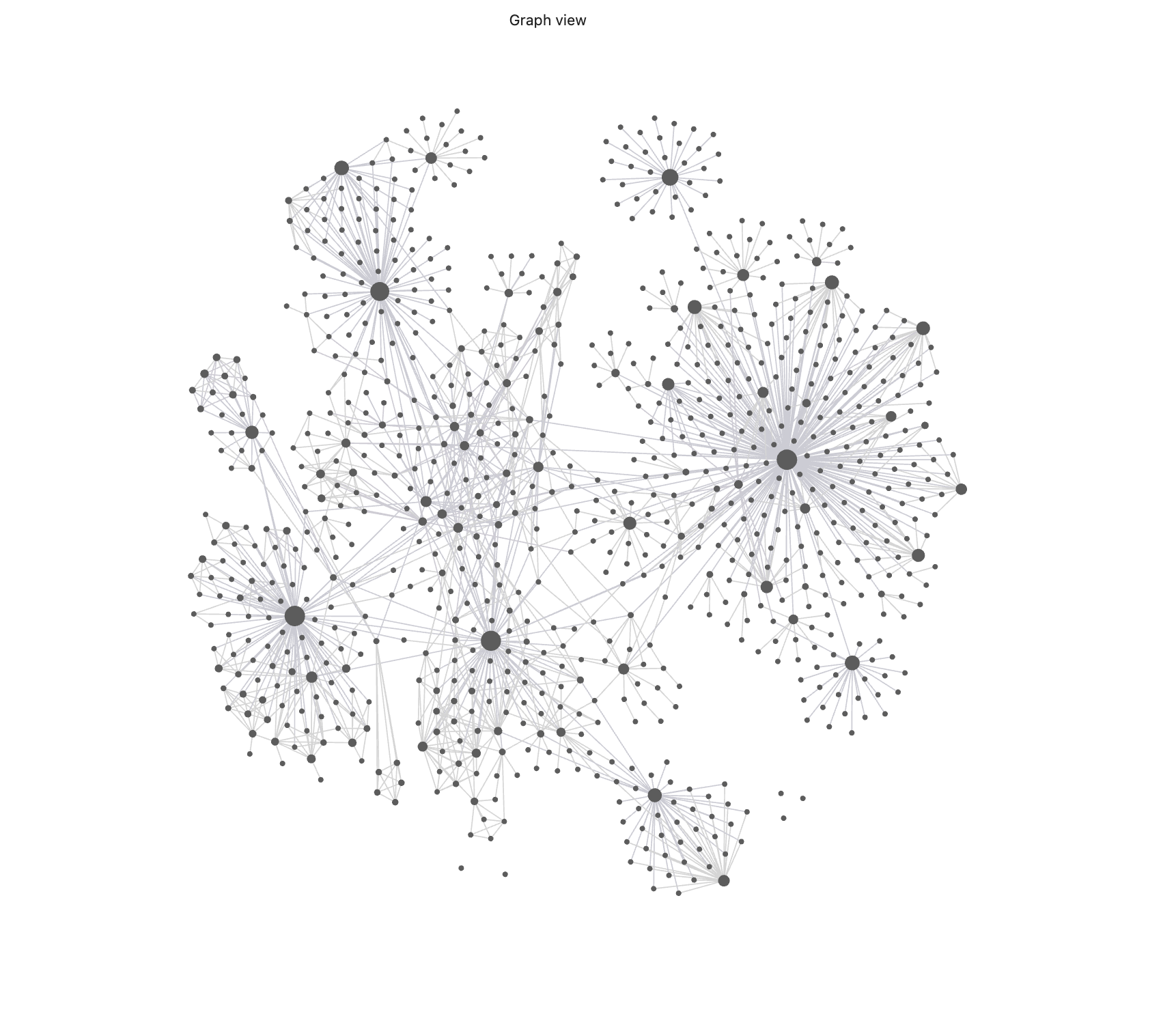
I build apps that read this vault directly. Every output flows back into the same structure. When I ask Claude at 06:30 in the morning where I stand, the answer is there in under a minute. Not because the model guesses well. Because the entire context is already there: deadlines, open tasks, recent changes, linked sources.
By now several agentic AIs work on the vault at the same time. The tags on my notes help with clustering: #project, #intelligence, #blog. That gives every agent more hints for finding the right context, without me steering all of it by hand.
Same architecture, different scale
Inside a company the principle looks identical. I am writing my bachelor thesis at Uhlmann right now. We are a leading ISO-certified manufacturer, everything documented down to the smallest detail. The Atlassian Teamwork Graph connects people, projects, documents and decisions into a network with millions of connections. On top of that come permission and compliance layers a personal vault does not need.
At TEAM26 Atlassian positioned the Teamwork Graph as the central context layer for all of its AI features. Rovo agents search several knowledge bases at once. Dia, the browser Atlassian acquired for this, is wired into the Teamwork Graph and can search the web on top. More context, better output.
Structurally my vault and the Teamwork Graph work the same way: nodes (people, projects, documents) connected by relationships. Tags cluster them by topic. The denser and cleaner the network, the better the results for the AI. The difference is scale. The principle behind it is the same. At least from what I have seen ;)
Maintenance is the actual job
The part that is no fun is identical in both: maintenance.
In my vault that means checking links every week, setting tags, preparing new versions. I do it so the content in the knowledge graph stays current and findable. The moment I let it slide, my AIs work with stale information or stop finding relevant notes at all. With several agents running at once I notice immediately.
In a company the team has to keep its tickets, Confluence pages and approvals current. Otherwise Rovo answers on the basis of stale data. Garbage in, garbage out. That holds at 50 linked sources just as much as at millions of connections.
The model is not the bottleneck
I have built, tested and deployed more than 40 Rovo agents for process automation, ticket analysis and knowledge search. Even on a solid data foundation the outputs often had room to improve. In our case the agent capabilities are the limit right now, not the data.
For most companies it is the other way round. They fail on context quality even though the models have long been strong enough.
The tags on this post (blog, atlassian, context, obsidian) help with clustering too, by the way. Not only for me. Also for the AIs that read my vault.
If you want to improve your AI, do not start with the model. Start with your own knowledge graph.